

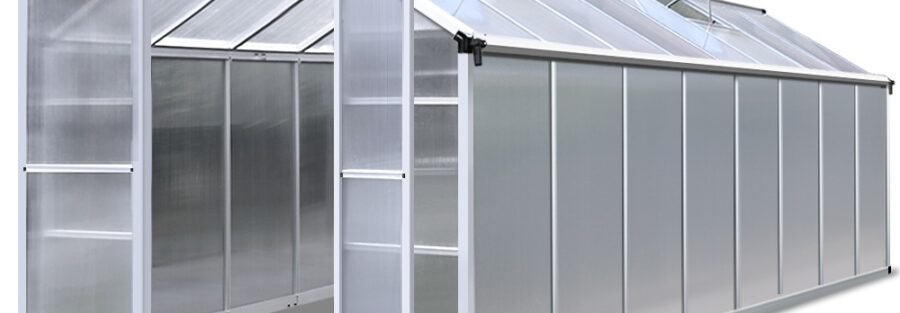
Choosing the right polycarbonate greenhouse panels is the single most important decision when building or re-covering a greenhouse. The panels determine how much light reaches your plants, how much you spend on heating, and how many seasons the structure lasts. This guide breaks down every factor — types, thickness, color, R-value, and installation — with the technical detail growers and commercial buyers actually need.
Are polycarbonate panels good for greenhouses? Yes — polycarbonate greenhouse panels are widely considered the best glazing material available. They transmit 80–90% of natural light while diffusing it evenly across the canopy, insulate far better than glass or single-film plastic (cutting heating costs 30–50%), resist impact up to 200 times more than glass, and carry built-in UV protection that shields both the panels and the plants. They’re lightweight, easy to cut and install, and last 10–20 years.

Why Use Polycarbonate Greenhouse Panels ?
Polycarbonate has replaced glass and polyethylene film as the glazing of choice for both hobby and commercial growers. Here’s why:
- Even light diffusion — unlike clear glass, polycarbonate scatters light so it reaches lower leaves, reducing hot spots and shadowing
- Superior insulation — the hollow air chambers in twin-wall and multiwall panels trap heat, cutting energy bills 30–50% versus single-pane glass
- Near-unbreakable — up to 200× the impact resistance of glass; survives hail, storms, and falling branches
- Built-in UV protection — a co-extruded UV layer prevents yellowing and protects plants from harmful rays
- Lightweight — about one-eighth the weight of glass, lowering framing costs and easing installation
- Anti-condensation option — a special coating channels moisture away, preventing damaging water droplets on plants
- Long lifespan — quality UV-protected panels last 10–20 years
Polycarbonate is the same family of solid polycarbonate sheets used in roofing, glazing, and safety applications — engineered here specifically for horticulture.
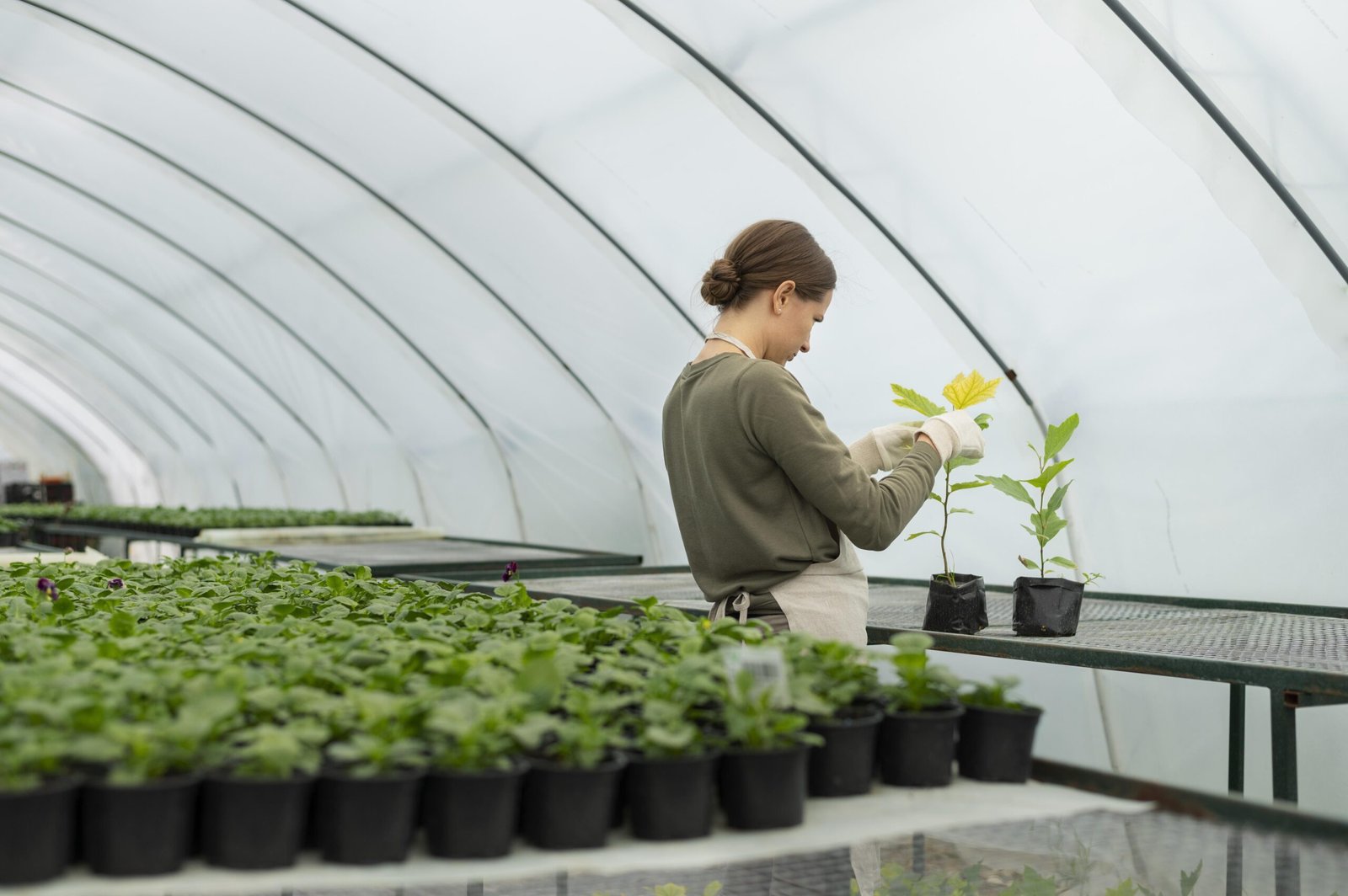
Types of Polycarbonate Greenhouse Panels
There are three main panel structures, each suited to different needs:
1. Solid (Single-Wall) Polycarbonate Panels
Glass-clear panels offering the highest light transmission (up to 90%) and the most traditional greenhouse look. Best where maximum light and clarity matter most, though they insulate less than multiwall. Our clear solid panels deliver near-glass transparency with far greater strength.
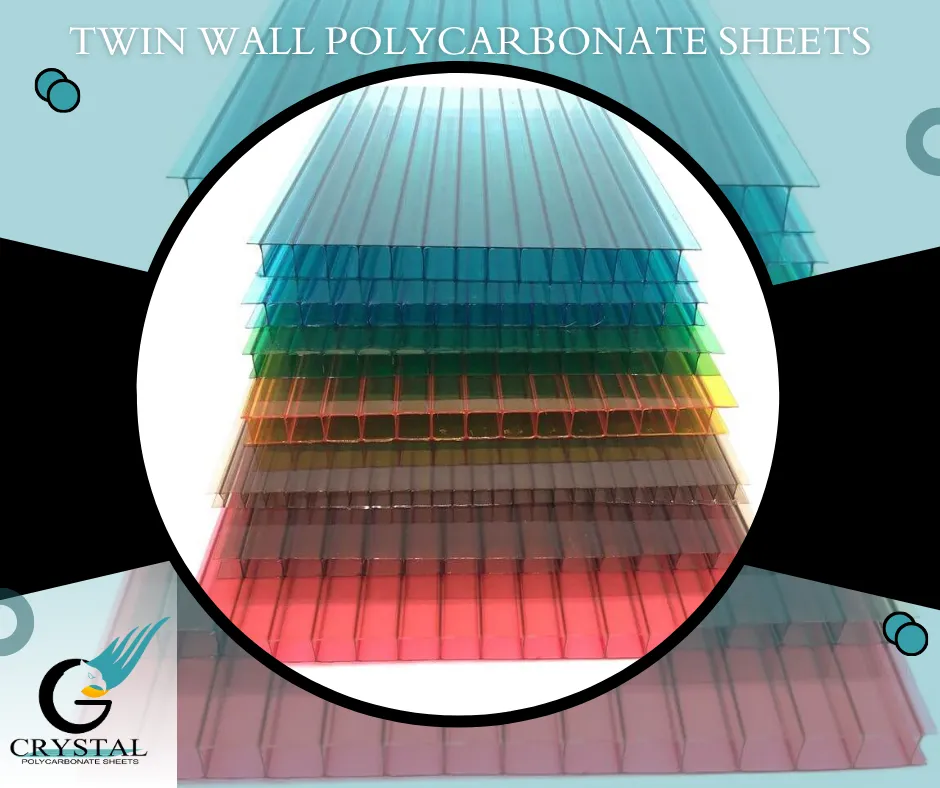
2. Twin-Wall Polycarbonate Panels
Two layers separated by ribs that trap insulating air. The most popular choice for greenhouses — around 80% light transmission with far better insulation than solid or glass, at an affordable price.
3. Multiwall (Triple-Wall / 5-Wall) Polycarbonate Panels
Three or more layers for maximum insulation and snow-load strength. Ideal for cold climates and year-round commercial growing where heat retention is critical. Browse our full multiwall polycarbonate range for thickness and color options.
For arched or tunnel greenhouses, flexible corrugated polycarbonate is also an option — cost-effective and easily bent to shape, though single-wall corrugated insulates less than multiwall.
What Thickness of Polycarbonate Do You Need for a Greenhouse?
Thickness is the most-asked question — and the answer depends on your climate and structure. Here’s a practical guide based on winter conditions and snow load:
| Thickness | Structure | R-Value | Best For |
|---|---|---|---|
| 4mm | Twin-wall | ~1.4 | Mild climates only — not recommended for windy/snowy areas (too flimsy) |
| 6mm | Twin-wall | ~1.6 | Hobby greenhouses, warm/mild climates, patio covers |
| 8mm | Twin-wall | ~1.7 | The all-round sweet spot — good insulation, easy handling |
| 10mm | Twin-wall | ~1.9 | Wider frame spacing, moderate-cold climates |
| 16mm | Multiwall (3–5 wall) | ~2.5 | Harsh winters, heavy snow, year-round commercial growing |
| 25mm | Multiwall | ~3.0 | Extreme cold, maximum insulation (needs aluminum profiles) |
Quick rule: For most home growers, 8mm or 10mm twin-wall is the best balance of insulation, durability, and cost. For cold, snowy regions or commercial year-round use, step up to 16mm multiwall. Avoid 4mm for anything exposed to wind or snow — it fails and costs more in replacements.
Matching Thickness to Your Climate Zone
- Mild winters (USDA zones 7–9): 6mm or 8mm twin-wall — strong light, easy handling
- Cold winters, moderate snow (zones 5–6): 8mm or 10mm twin-wall — balances insulation and cost
- Harsh winters, heavy snow (zones 3–4): 16mm multiwall — highest R-value and snow-load capacity
- Hot climates (Gulf, Africa): 6–8mm twin-wall with opal or UV — see how our panels perform in the UAE and Kenya
Always pair thicker panels with correctly spaced framing and purlins to carry the snow load.
Which Color Is Best: Clear, Opal, or Bronze?
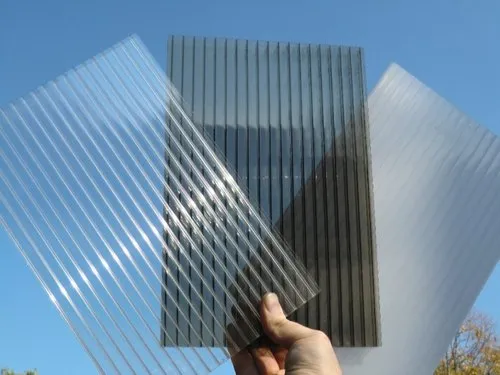
Color directly affects light transmission — and therefore plant growth:
| Color | Light Transmission | Best For |
|---|---|---|
| Clear | 80–90% | Most greenhouses — maximum light for photosynthesis |
| Opal (milky white) | ~40–50% | Hot, sunny climates — diffuses light, reduces overheating |
| Bronze | ~35–40% | Patios and pergolas — too dark for most greenhouse plants |
Best practice: Use clear panels for maximum growth as your default. In very sunny or hot regions, mix in a few opal panels at one end for shade and heat control. Bronze is generally too dark for growing and better suited to patio covers.
The Golden Rule of Light vs Insulation
There’s a trade-off every grower should understand: thicker panels insulate better but transmit slightly less light. For example, 6mm clear transmits ~80% light, while 16mm clear transmits ~74%. The small light loss is usually worth the major gain in heat retention — but if your priority is pure light for high-demand crops, don’t over-thicken.
Solid vs Twin-Wall for Greenhouses: Which Wins?
| Factor | Solid | Twin-Wall |
|---|---|---|
| Light transmission | Up to 90% (highest) | ~80% |
| Insulation | Lower | Much higher (air gap) |
| Impact resistance | Highest (nearly unbreakable) | Very high |
| Weight | Heavier | Lighter |
| Cost | Premium | More affordable |
| Best for | Max light, traditional look | Best all-round value & insulation |
Verdict: Twin-wall wins for most growers — the best balance of insulation, strength, and cost. Choose solid only if maximum light and a classic glass-like appearance are your top priorities and budget allows.
Anti-Condensation Panels: A Must for Serious Growers
Condensation is the hidden enemy of greenhouse glazing. When warm, humid air inside meets cooler panels, water droplets form on the underside — blocking light, dripping onto plants, and encouraging mold and disease. Quality polycarbonate greenhouse panels solve this with an anti-condensation (anti-drip) coating on the interior surface.
Instead of forming droplets, moisture spreads into a thin film that runs down the panel and drains away. The benefits are direct: more consistent light transmission, fewer fungal problems, and healthier plants. For commercial growers, anti-condensation panels are not a luxury — they protect yield. Always confirm this coating is included when specifying panels for humid or high-density growing.
How Much Energy Can Polycarbonate Save?
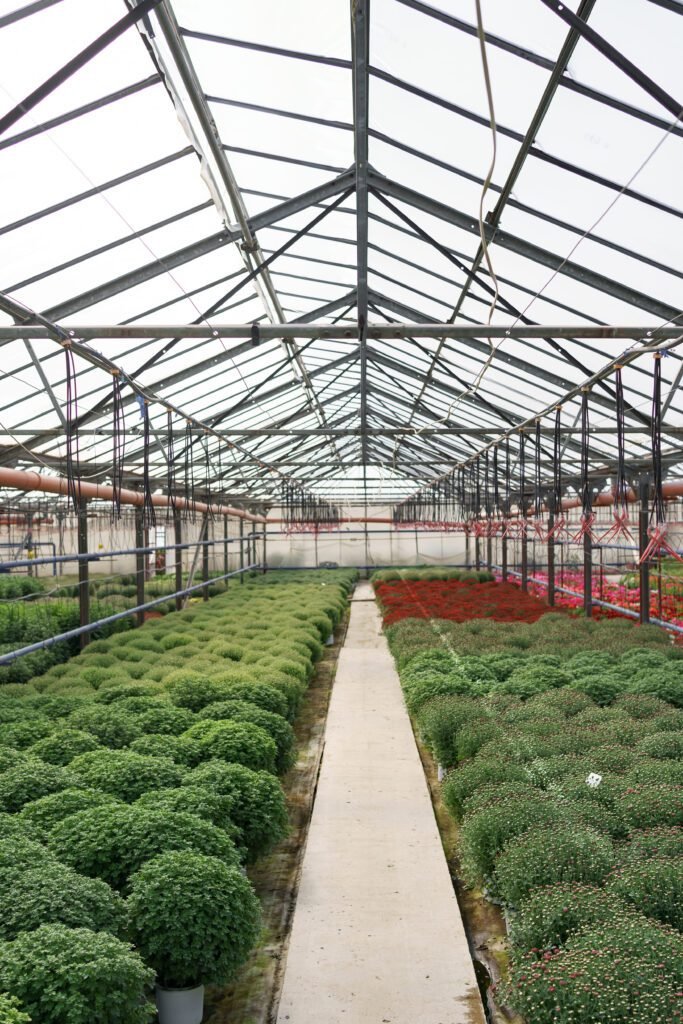
Multiwall polycarbonate can reduce heating costs by 30–50% compared to single-pane glass or film, thanks to the insulating air chambers (R-1.6 for 6mm up to R-2.5+ for 16mm). Many commercial growers see the panel cost pay for itself within 2–3 years through energy savings alone — a key figure for any B2B buyer calculating ROI.
How to Install Polycarbonate Greenhouse Panels (Step by Step)
- Identify the UV side — one side is UV-coated and labeled; it must face outward toward the sun. Mark it before removing the film.
- Orient the flutes vertically — channels must run up-and-down (roof slope direction) so condensation drains out, never horizontally.
- Seal the top edge with solid aluminum foil tape to keep out water and insects.
- Seal the bottom edge with vented (breathable) foil tape to let condensation drain while blocking dust.
- Use polycarbonate profiles (H-profiles to join panels, U-profiles to cap edges) for a clean, sealed finish.
- Drill oversized holes — slightly larger than the screws to allow thermal expansion.
- Use screws with rubber washers — don’t overtighten; leave room for movement.
- Space framing to the snow load — follow the manufacturer’s span chart for your thickness.
Polycarbonate is flexible and won’t crack when cut or drilled, and can be cold-formed on-site for curved structures — no special tools required. The same installation principles apply to polycarbonate roofing sheets on any glazed structure.
Common Greenhouse Glazing Mistakes to Avoid
Even good panels fail when installed wrong. Avoid these frequent errors:
- Installing the UV side inward — the panel yellows and degrades within a few seasons. The UV-coated side always faces the sun.
- Running flutes horizontally — traps condensation and dust inside the channels, clouding the panel. Flutes must run vertically to drain.
- Choosing 4mm for exposed structures — it flexes and blows out in wind or snow, costing more in replacements.
- Skipping the anti-condensation grade in humid climates — leads to dripping, mold, and disease.
- Overtightening screws — polycarbonate expands with heat; rigid fixing causes cracks and buckling.
- Leaving flutes open — dust, insects, and algae enter; always cap with the correct tape and profiles.
Maintenance & Care
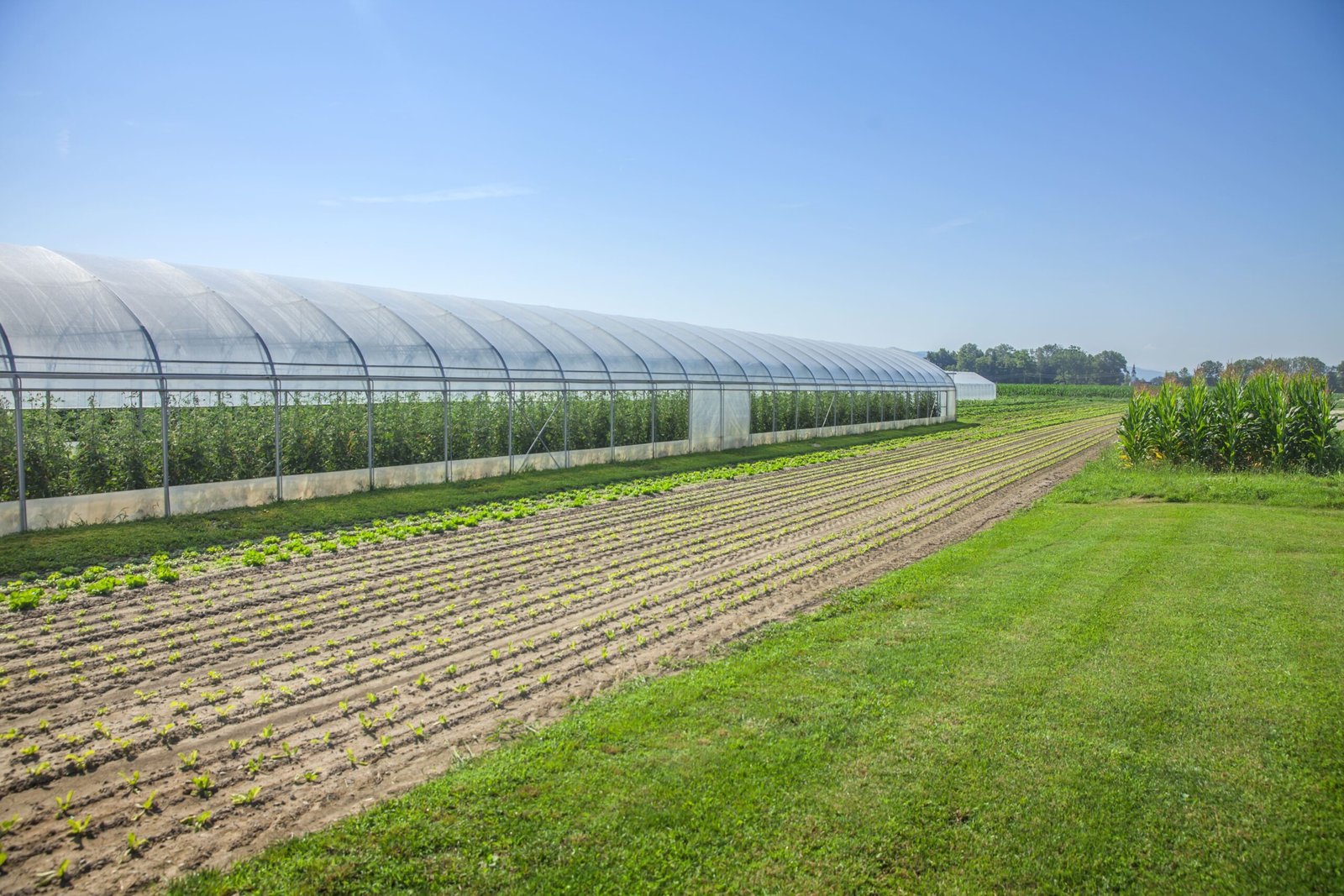
Polycarbonate greenhouse panels need little upkeep to last their full 10–20 year lifespan:
- Clean with lukewarm water, mild soap, and a soft cloth — never abrasive pads or harsh solvents, which damage the UV layer.
- Rinse thoroughly and let air-dry to avoid streaking.
- Inspect profiles, tapes, and seals once a year, especially after storms.
- Clear the flutes of multiwall panels if dust or algae appears, and replace end tapes as needed.
- Avoid walking on panels; use support boards spanning the framing if roof access is required.
How to Calculate How Many Panels You Need
- Measure the total roof and wall area to be glazed (in m² or ft²).
- Divide by the coverage area of one panel.
- Add 10–15% for overlaps, cuts, and waste.
- Round up to the nearest whole panel, and add matching profiles and tape.
For commercial builds, our technical team can spec panel type, thickness, and quantity, then calculate bulk FOB pricing for your exact structure.
Buying Polycarbonate Greenhouse Panels Wholesale (B2B)
Most greenhouse panels online are sold in small retail packs at premium prices. For commercial growers, distributors, and large builds, buying factory-direct changes the economics entirely:
- Factory-direct FOB pricing ($2.50–3.50/kg) with no middleman margins
- Custom sizing and thickness to match your exact frame — not fixed retail sizes
- Bulk and container quantities for commercial greenhouses and resale
- Certified quality — CE Mark + ISO 9001, 14001, 45001 — with 100% virgin raw material
- Export experience to 60+ countries with full documentation
As a direct manufacturer, G-Crystal supplies growers and distributors worldwide with twin-wall, multiwall, and solid greenhouse panels — including anti-condensation and UV-protected grades — at wholesale rates retail stores can’t match.
Why Choose G-Crystal Greenhouse Panels?
- Manufacturer, not a trader — factory-direct pricing and quality control
- Full range — solid, twin-wall (4–10mm), and multiwall (16mm) in clear, opal, and bronze
- Double-sided UV protection as standard against yellowing
- 20+ years of manufacturing, exporting to 60+ countries
- 10-year warranty against yellowing and weather damage
- Custom cut-to-size and full profile/accessory range
- B2B support — bulk supply for distributors, contractors, and commercial growers
Summary
The best polycarbonate greenhouse panels balance light, insulation, and durability for your specific climate. Choose clear twin-wall (8–10mm) as the all-round best for most growers, step up to 16mm multiwall for cold, snowy regions, and mix in opal panels for hot climates. Always install with the UV side out and flutes vertical, specify the anti-condensation grade for humid conditions, and for commercial builds buy factory-direct to cut costs. Quality UV-protected panels will serve you for 10–20 years of productive growing.
📞 Request a wholesale quote: +2 01095990442 | ✉️ info@gcrystal-pc.com
Frequently Asked Questions
Are polycarbonate panels good for greenhouses?
Yes. They transmit 80–90% of light with even diffusion, insulate 30–50% better than glass, resist impact 200× more than glass, and include UV protection — making them ideal for year-round growing.
Can polycarbonate be used for a greenhouse?
Absolutely. Polycarbonate is one of the most popular greenhouse glazing materials, used for roofs, sidewalls, and full structures in both hobby and commercial greenhouses.
How thick should Polycarbonate Greenhouse Panels?
For most growers, 8mm or 10mm twin-wall offers the best balance of insulation and cost. Use 6mm in mild climates, and 16mm multiwall for harsh winters with heavy snow. Avoid 4mm for exposed structures.
What is the best color Polycarbonate Greenhouse Panels?
Clear is best for maximum plant growth (80–90% light). In very hot, sunny climates, add opal panels for shade. Bronze is usually too dark for growing plants.
Is twin-wall or solid polycarbonate better for a greenhouse?
Twin-wall is best for most growers — better insulation and value. Solid offers slightly more light (90%) and a classic look but costs more and insulates less.
How long do polycarbonate greenhouse panels last?
Quality UV-protected panels last 10–20 years, retaining clarity and strength thanks to the co-extruded UV layer.
Can I buy polycarbonate greenhouse panels wholesale from the factory?
Yes. G-Crystal supplies factory-direct at FOB pricing ($2.50–3.50/kg) with custom sizing and bulk quantities, exporting to 60+ countries.


