


A polycarbonate conservatory roof has become the preferred solution for modern conservatories, garden rooms, and sunrooms that demand year-round comfort, durability, and energy efficiency. As homeowners, developers, and commercial projects move away from traditional glass roofing, polycarbonate offers a smarter alternative that combines high impact resistance, excellent thermal and sound insulation, and controlled light transmission in a lightweight structure.
Designed to withstand harsh weather conditions while maintaining long-term visual performance, polycarbonate conservatory roofs provide reliable UV protection, reduce heat buildup, and minimize glare—making conservatory spaces more comfortable in both hot and cold climates. For large-scale projects, importers, and wholesalers, polycarbonate roofing systems also deliver clear logistical and economic advantages, including lower transport risk, easier installation, and a service life exceeding 15 years.
Table of Contents
ToggleWhat Is a Polycarbonate Conservatory Roof?
A Polycarbonate Conservatory Roof is a popular roofing solution made from high-strength, lightweight plastic panels. It is the most common alternative to glass roofs, offering a balance between natural light, durability, and cost-effectiveness.
In modern architecture, these roofs typically use Multiwall or Twin-wall structures—essentially layers of polycarbonate with air gaps in between—to provide insulation and structural rigidity.
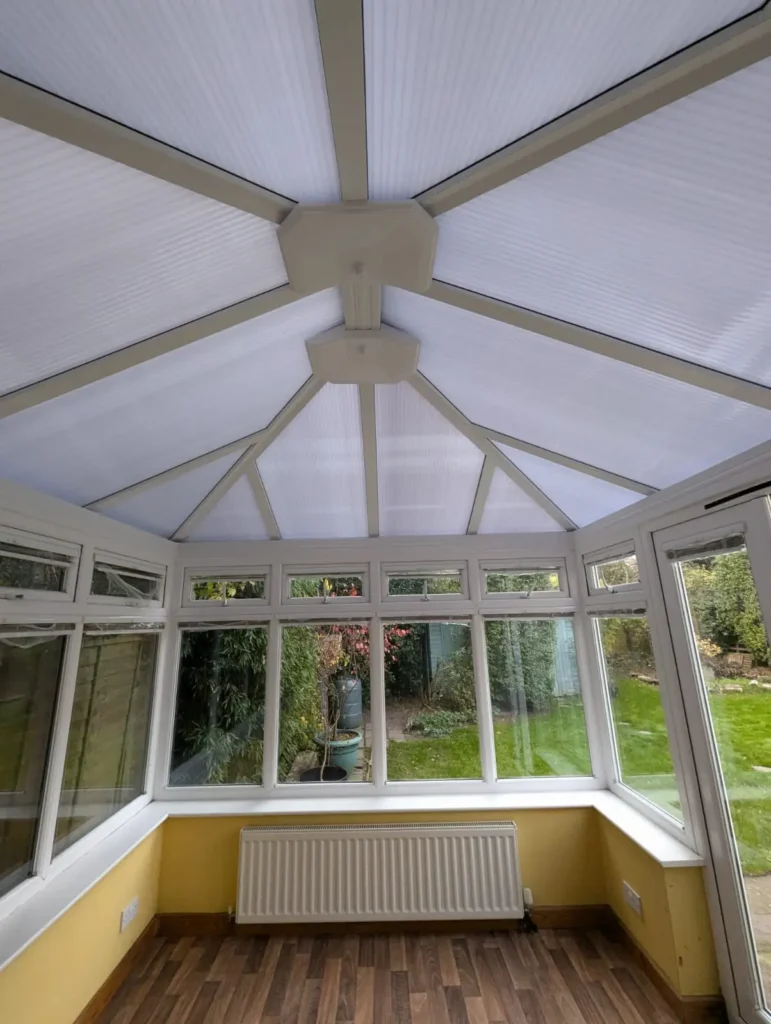
Why Polycarbonate Is Replacing Glass in Conservatory Roofs?
- Unbreakable Durability: 200x stronger than glass, offering superior safety against impact.
- Ultra-Lightweight: 50% lighter than glass, simplifying installation and reducing structural costs.
- Superior Light Diffusion: Unlike glass, it eliminates glare and “hotspots” for soft, ambient lighting.
- Better Insulation: Multi-wall structures trap air, providing higher thermal efficiency than standard glass.
- UV Protection: Blocks 99% of harmful rays, preventing furniture fading and skin damage.
- Cost-Effective: Significantly more affordable in material, shipping, and labor costs.
Key Benefits of a Polycarbonate Conservatory Roof
- Unmatched Durability: A Polycarbonate Conservatory Roof is virtually unbreakable, offering impact resistance 250 times stronger than glass against hail and extreme weather.
- Superior Thermal Insulation: The multi-wall structure of a Polycarbonate Conservatory Roof traps air to regulate temperatures, keeping your space warm in winter and cool in summer.
- Advanced UV Protection: Each Polycarbonate Conservatory Roof is co-extruded with a UV-resistant layer that prevents yellowing and protects interior furniture from fading.
- Lightweight Efficiency: Being 50% lighter than glass, a Polycarbonate Conservatory Roof reduces structural load and significantly cuts down on installation time and labor costs.
- Optimal Light Diffusion: An Opal Polycarbonate Conservatory Roof eliminates harsh glare and hotspots, providing soft, ambient light with 100% privacy.
- Certified Fire Safety: Every Polycarbonate Conservatory Roof is engineered to be self-extinguishing (Class B1), meeting global safety standards for residential and commercial projects.
how long does a polycarbonate conservatory roof last?
A polycarbonate conservatory roof typically lasts 15 to 20 years or more, depending on the quality of the material, thickness, and exposure to weather conditions. High-quality polycarbonate sheets, like those from G-Crystal Plastic Industries, include UV protection layers that prevent yellowing, brittleness, and structural degradation, ensuring long-term performance.
Proper installation and maintenance—such as cleaning with non-abrasive solutions and checking seals—can further extend the roof’s lifespan, keeping it visually clear and structurally sound for decades.
Types of Polycarbonate Conservatory Roofs
- Solid Polycarbonate Sheets
- Transparent or semi-transparent sheets that allow maximum natural light while providing UV protection.
- Ideal for small conservatories or areas where high thermal insulation is not required.
- Twin-Wall Polycarbonate Sheets
- Consist of two layers separated by an air gap for enhanced thermal and acoustic insulation.
- Lightweight, durable, and safer than glass, making them suitable for larger roofs.
- Multi-Wall Polycarbonate Sheets
- Made with three or more layers (often 3–5) for superior thermal and sound insulation.
- Perfect for large residential or commercial conservatories requiring efficient climate control.
- Opal (Diffused) Polycarbonate Sheets
- Milky white or diffused finish for even light distribution and glare reduction.
- Ideal for spaces needing soft, uniform daylight while maintaining privacy.
- Tinted Polycarbonate Sheets
- Colored or shaded panels to reduce solar heat gain and glare.
- Suitable for hot climates or decorative and privacy-focused applications.
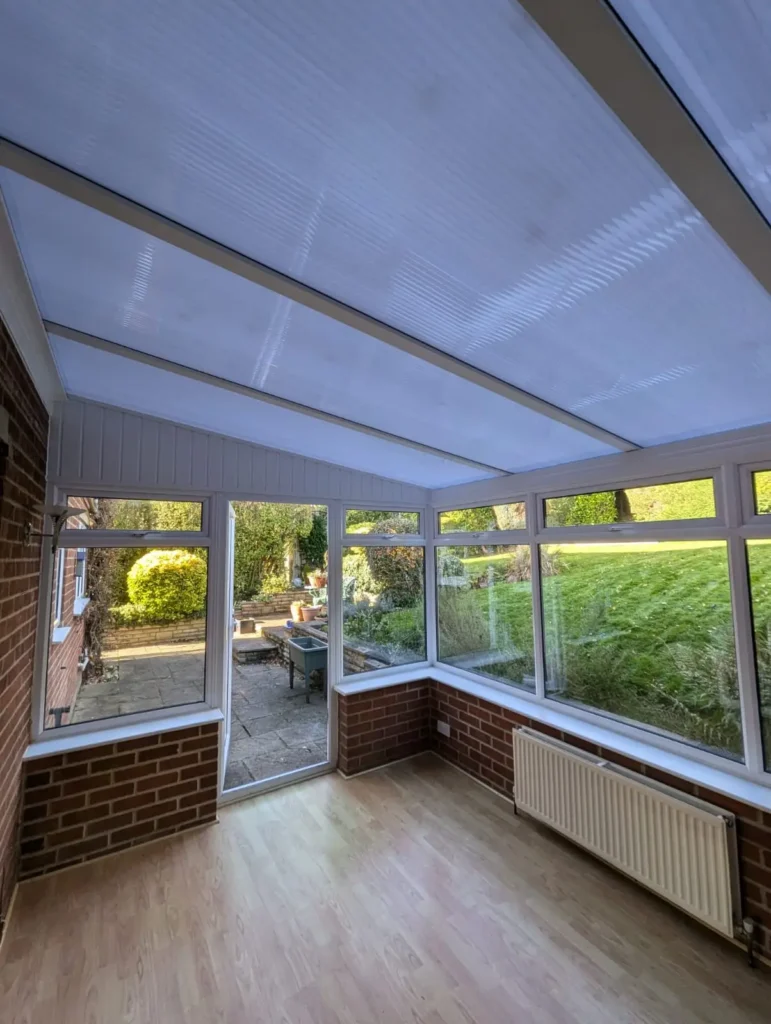
Custom Shapes and Designs
Polycarbonate conservatory roofs offer unmatched flexibility for architects and designers looking to create unique, custom shapes and structures. Unlike traditional glass, polycarbonate sheets can be cut, curved, and shaped to fit arched ceilings, domes, sloped roofs, and other creative architectural designs.
Advantages of Custom Designs with Polycarbonate:
- Flexible Installation: Curved or angled panels can be installed without compromising structural integrity.
- Tailored Aesthetics: Opal, tinted, or multi-wall sheets allow designers to achieve the desired light diffusion, privacy, and color effects.
- Adaptable to Large or Irregular Spaces: Multi-wall and twin-wall structures provide stability even in large-span roofs or irregular shapes.
- Integration with Modern Features: Ideal for skylights, LED lighting systems, or decorative elements while maintaining energy efficiency and safety.
At G-Crystal Plastic Industries, our polycarbonate sheets are manufactured to precise specifications, enabling clients to realize innovative, custom-designed conservatory roofs that combine functionality, style, and long-term performance.
Comparison of Different Plastic Sheets for Conservatory Roofs
| Feature | Polycarbonate | Acrylic (PMMA) | PVC | Glass |
|---|---|---|---|---|
| Impact Resistance | Excellent (up to 250x stronger than glass) | Moderate | Low | Very Low |
| Light Transmission | Good to High | Very High | Moderate | Very High |
| Thermal Insulation | High (especially multi-wall) | Moderate | Low | Low |
| UV Stability | Excellent (co-extruded options) | Good | Poor | Excellent |
| Weight | Lightweight | Lightweight | Very Lightweight | Heavy |
| Durability | Very High | Medium | Low | Variable |
| Cost | Mid to High | Low to Mid | Low | High |
Conclusion: Choosing polycarbonate sheets is the best option for a polycarbonate conservatory roof due to their superior impact resistance, excellent thermal and acoustic insulation, UV protection, lightweight structure, and long-term durability, making them ideal for both residential and commercial projects.
Why Polycarbonate Is the Best Choice for Conservatory Roofs?
Polycarbonate sheets outperform other roofing materials when it comes to conservatories due to their unique combination of strength, light management, and durability. Unlike glass, polycarbonate is virtually unbreakable, making it safer for residential and commercial spaces. Its multi-wall and opal variants provide excellent thermal insulation, reducing heating and cooling costs, while effectively diffusing light to create a comfortable indoor environment.
At G-Crystal Plastic Industries, we manufacture high-quality polycarbonate sheets with advanced UV protection, ensuring long-term durability and maintaining their aesthetic appeal. Additionally, polycarbonate is lightweight, simplifying installation and reducing structural load, which makes it the ideal choice for anyone seeking a long-lasting, efficient, and visually appealing conservatory roof.
Applications of Polycarbonate Conservatory Roofs
Polycarbonate conservatory roofs are versatile, durable, and energy-efficient, suitable for both residential and commercial projects.
- Residential Conservatories & Sunrooms: Provide bright, comfortable spaces with reduced glare and UV protection.
- Commercial Spaces: Ideal for skylights, atriums, and offices, offering safety, light diffusion, and energy savings.
- Greenhouses: Opal panels ensure even light distribution, protecting plants and promoting uniform growth.
G-Crystal Plastic Industries offers high-quality polycarbonate sheets with excellent UV resistance, thermal insulation, and long-term performance for all these applications.
Advantages of Polycarbonate Conservatory Roofs
Polycarbonate conservatory roofs offer multiple advantages that make them the preferred choice for modern residential and commercial projects:
- High Impact Resistance: Virtually unbreakable, providing superior safety compared to glass or acrylic panels.
- Lightweight Structure: Easier installation and reduced structural support requirements.
- Thermal and Acoustic Insulation: Multi-wall and opal variants help maintain comfortable indoor temperatures and reduce external noise.
- UV Protection: Prevents yellowing and material degradation, ensuring long-term aesthetic appeal.
- Even Light Diffusion: Opal or diffused panels create soft, glare-free illumination, enhancing visual comfort.
- Durability and Longevity: Designed to last 15+ years while maintaining performance in various weather conditions.
- Energy Efficiency: Reduces heating and cooling costs by improving insulation and minimizing solar heat gain.
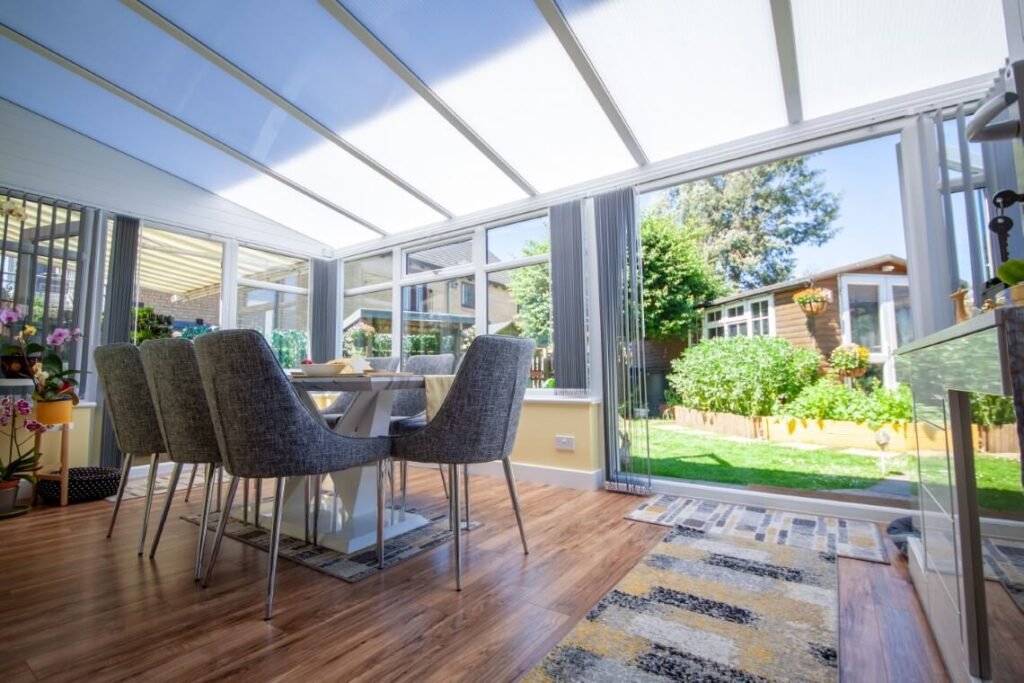
Why Choose G-Crystal Polycarbonate Sheets
G-Crystal Plastic Industries provides premium polycarbonate sheets that combine durability, UV protection, and superior light diffusion, ideal for residential and commercial conservatory roofs.
Key Benefits:
- Ultra-pure materials to prevent yellowing and maintain aesthetics.
- Co-extruded UV layers for long-lasting sun resistance.
- Variety of options: solid, twin-wall, multi-wall, opal, and tinted.
- Lightweight and easy to install, reducing structural load.
- Reliable global supply for B2B clients and wholesalers.
Upgrade your conservatory today with G-Crystal. Contact us to request a quote or explore our full range of premium polycarbonate products for durable, energy-efficient, and visually appealing roofs.


