


For businesses and industries seeking the perfect combination of transparency, durability, and efficiency, choosing the right material is crucial. In the polycarbonate vs acrylic debate, acrylic has long been praised for its crystal-clear appearance and lightweight nature, while polycarbonate has emerged as a powerhouse of strength, impact resistance, and versatility. In environments where safety, longevity, and performance matter, the choice can significantly affect project outcomes. This article dives into the key differences between acrylic and polycarbonate, highlighting their pros and cons, and explains why polycarbonate is increasingly the preferred solution for modern commercial, industrial, and construction projects.
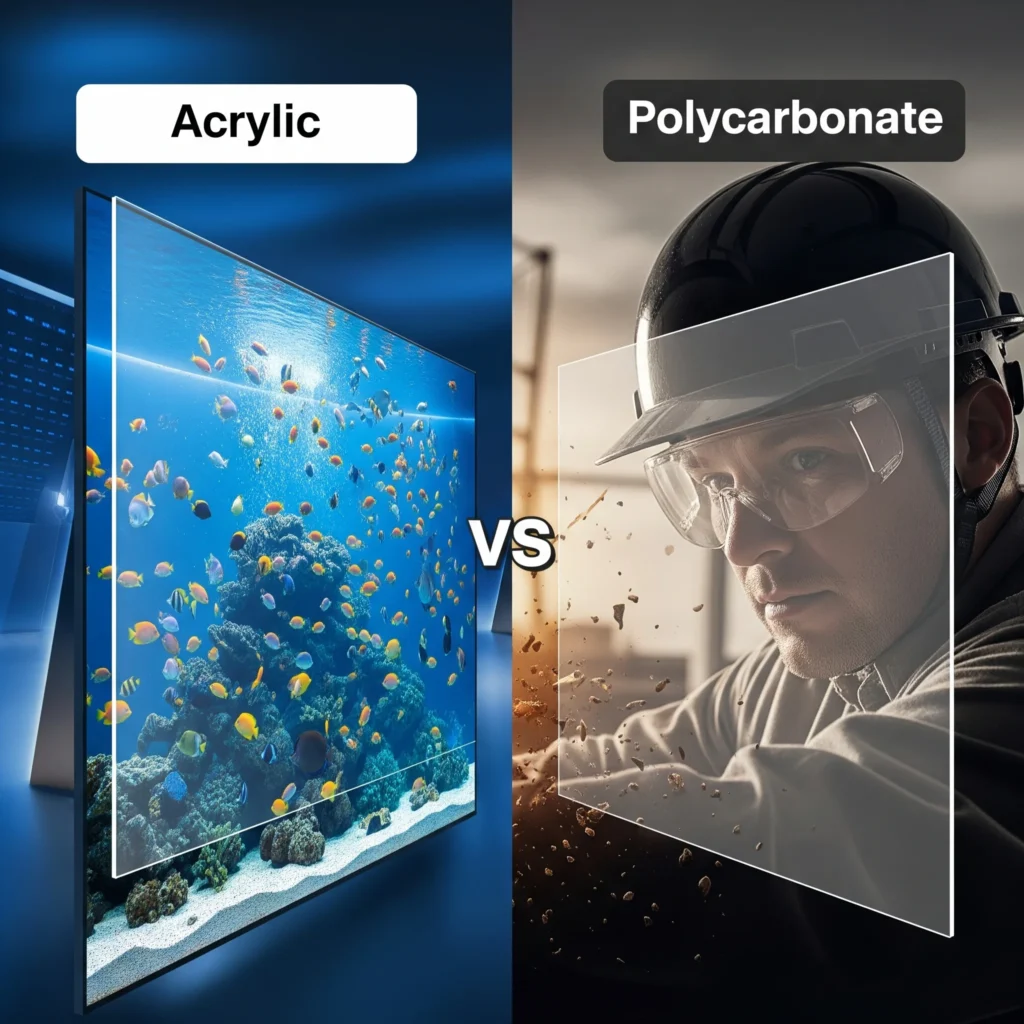
What is Acrylic (PMMA)?
Acrylic, also known as PMMA (Polymethyl Methacrylate) , is a transparent thermoplastic material often used as a lightweight alternative to glass. It is known for its excellent clarity, smooth surface, and aesthetic appeal, making it a popular choice for applications that require high transparency and visual quality.
It is widely used in windows, display cases, signage, protective barriers, and decorative panels, offering a balance of light weight, ease of fabrication, and decent weather resistance.
In short, acrylic (PMMA) is a clear, versatile plastic that combines beauty with functionality, ideal for projects where visual appearance is a priority.
Advantages of Acrylic (PMMA)
Acrylic offers several benefits that make it a popular choice for projects requiring clarity and design flexibility:
- Superior Optical Clarity: Provides exceptional visual transparency, ideal for displays and decorative applications.
- Excellent UV Resistance: Naturally resists yellowing and degradation from sunlight, keeping its appearance pristine outdoors.
- Lightweight: Much lighter than glass, making handling and installation easier.
- Easy to Fabricate: Can be cut, shaped, and polished with ease, allowing for versatile designs.
- Good Scratch Resistance: Generally more resistant to scratches compared to untreated polycarbonate.
Disadvantages of Acrylic (PMMA)
Despite its advantages, acrylic has some limitations that should be considered:
- Relative Brittleness: Can crack or shatter under strong impact, making it less suitable for safety-critical applications.
- Lower Heat Tolerance: Softens and deforms at lower temperatures compared to polycarbonate.
- Chemical Sensitivity: Can be damaged by certain solvents and harsh chemicals.
polycarbonate vs acrylic : A Direct Feature Comparison
To help clarify your decision, here’s a comparative table summarizing the key differences, highlighting Polycarbonate’s strengths in the ongoing polycarbonate vs acrylic debate:
Applications of Polycarbonate vs Acrylic
Understanding the practical applications of polycarbonate vs acrylic helps businesses and project planners choose the right material for their needs.
Acrylic Applications:
- Decorative panels and interior design elements
- Lighted signs and displays
- Aquariums and museum display cases
- Retail fixtures and counters
- Decorative lighting components
Polycarbonate Applications:
- Industrial and commercial roofing
- Greenhouses and conservatories
- Protective barriers and security panels
- Safety glazing and windows in high-risk environments
- Machinery guards and enclosures
- Applications requiring impact resistance, fire safety, and durability
While acrylic is suitable for aesthetic, indoor, or low-impact applications, polycarbonate excels in demanding environments where strength, safety, and long-term durability are required. Choosing the right material ensures project success and optimal performance.

Durability and Maintenance of Polycarbonate vs Acrylic
When comparing polycarbonate vs acrylic, durability and maintenance are key factors that often determine the best choice for a project.
Acrylic: While acrylic offers excellent clarity and is lightweight, it is more prone to scratches, cracks, and breakage under impact. It may also yellow over time when exposed to sunlight if not UV-protected. Maintenance involves careful cleaning with non-abrasive materials to preserve its appearance.
Polycarbonate: Polycarbonate is far more durable and resistant to impact, making it ideal for high-traffic or industrial applications. It withstands extreme weather, temperature fluctuations, and UV exposure without significant degradation. Cleaning and maintenance are minimal, and the material retains its strength and clarity over time.
Conclusion: For long-term projects requiring minimal maintenance and maximum durability, polycarbonate outperforms acrylic in almost every scenario.
Polycarbonate vs Acrylic: Which One Suits Your Project?
Choosing between polycarbonate vs acrylic depends on your project’s specific needs:
Choose Acrylic if:
- Your project is decorative, indoor, or low-impact.
- Budget is a primary concern and high strength is not required.
- Maximum optical clarity is important.
Choose Polycarbonate if:
- Safety, impact resistance, and durability are critical.
- The material will be exposed to harsh weather, heat, or UV light.
- You need flexibility for bending, shaping, or cold forming.
- Long-term reliability and minimal maintenance are required.
Acrylic is ideal for aesthetic and light-duty applications, while polycarbonate is the preferred choice for commercial, industrial, and high-performance projects, offering superior strength, longevity, and resilience.
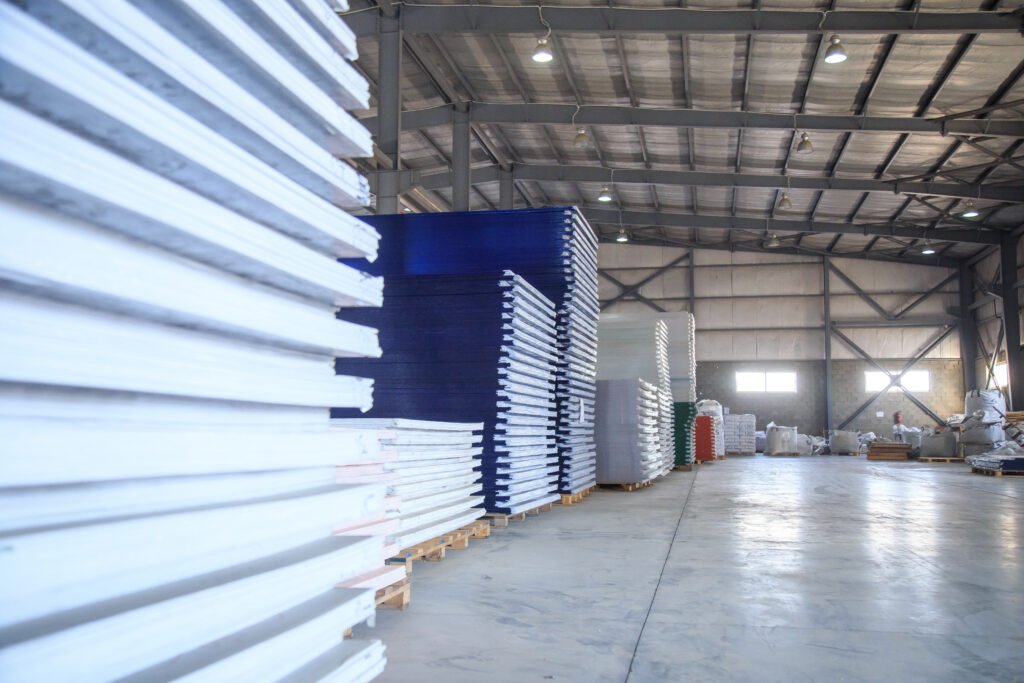
Price Comparison: Polycarbonate vs Acrylic
Acrylic: Cheaper, typically priced around $1.5–2 per kilogram, lightweight and easy to install, suitable for interior and decorative applications.
Polycarbonate: More expensive, usually ranging from $2–3 per kilogram, but highly impact-resistant, heat and UV resistant, and long-lasting, making it a better investment for commercial and industrial projects.
Why Polycarbonate Costs More:
- Higher strength and durability, resistant to impact and breakage.
- Superior thermal and sound insulation, with added UV protection.
- Longer lifespan and lower maintenance, reducing long-term costs.
Conclusion: For light-duty and decorative projects: Acrylic is sufficient and offers lower upfront cost. For industrial projects or exposed surfaces: Polycarbonate is the better choice despite its higher price, thanks to its strength and durability.
Why Polycarbonate Often Wins the Polycarbonate vs Acrylic Debate
When it comes to choosing between these two versatile plastics, the final decision depends on your project’s specific needs. While Acrylic offers a clear, attractive, and more budget-friendly option for aesthetic or low-impact applications, Polycarbonate proves superior for demanding scenarios where safety, durability, and resilience are essential. In the polycarbonate vs acrylic debate, Polycarbonate clearly takes the lead for critical and high-performance uses.
Choose Polycarbonate if:
- Impact resistance and shatterproof properties are a top priority, including any application involving security, protection, or potential impacts.
- Your project requires a material that can withstand high temperatures or extreme thermal fluctuations.
- The design needs flexibility, allowing cold forming or bending — a major advantage of polycarbonate over acrylic.
- Fire safety is a crucial concern.
- You are seeking a long-term, highly reliable solution, even at a higher initial investment.
You can request a quote and inquire about our exclusive offers through our Contact Us page. Don’t forget, we are the best polycarbonate factory in Egypt, the Middle East, and Africa.
In conclusion, while Acrylic shines in its clarity and ease of use for certain purposes, the inherent strength, heat resistance, and safety features of Polycarbonate often make it the more robust and reliable choice. For professionals navigating the polycarbonate vs acrylic decision, understanding these core differences is key to ensuring the success and safety of their projects.


