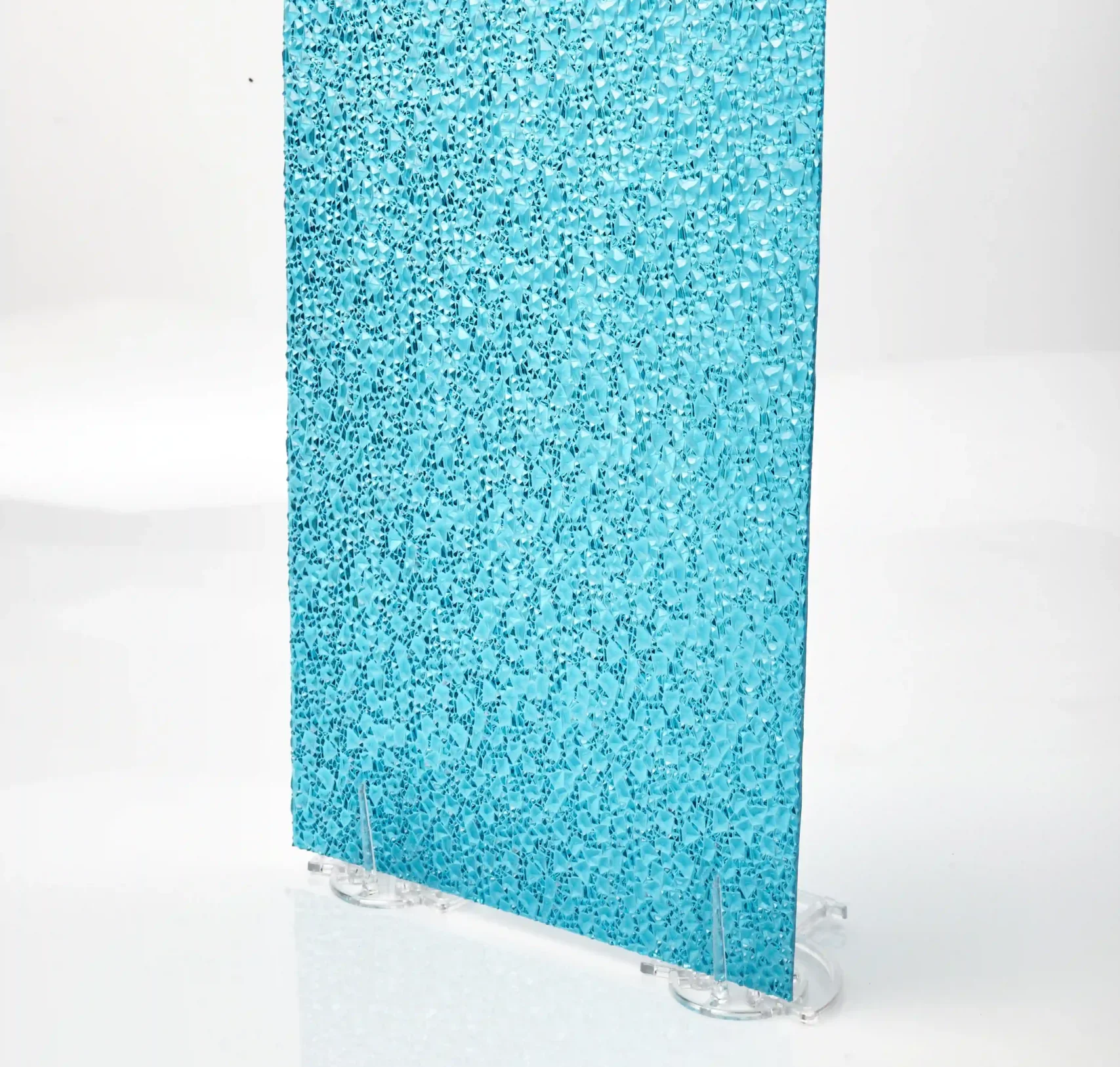
At G-Crystal, our UV resistant polycarbonate sheets are built to survive the sun. They combine strength, high transparency and lasting protection from ultraviolet radiation — the choice for outdoor applications where ordinary plastic fails.
Untreated plastic yellows within a few seasons. Ours are co-extruded with a permanent double-sided UV layer, made from 100% virgin material and backed by a 10-year warranty. As a direct manufacturer — not a trader — we supply importers, distributors and contractors with ISO and CE certified quality at factory-direct FOB pricing.
📞 Request a factory quote — FOB $2.50–3.50/kg, MOQ 5 tonnes or one 20 ft container. +2 01095990442

What Are UV Resistant Polycarbonate Sheets?
UV resistant polycarbonate sheets are transparent panels manufactured with a co-extruded UV protection layer that blocks up to 99.9% of harmful ultraviolet rays. This layer prevents the yellowing, clouding and brittleness that untreated plastic suffers under sunlight, keeping the sheet clear and strong for 10 to 15 years — with impact resistance up to 250 times greater than glass.
What Is the UV Protection Layer?
The UV protection layer is a thin, transparent layer fused onto the sheet surface during manufacturing, in the same pass as the sheet itself. This is what co-extrusion means: the layer becomes part of the panel rather than sitting on top of it.
Though invisible to the naked eye, it does three things: blocks harmful UV rays from penetrating the sheet, protects the people, plants and products beneath it, and extends the sheet’s service life to 10–15 years. At G-Crystal, this layer is applied on both sides as standard for maximum outdoor durability.
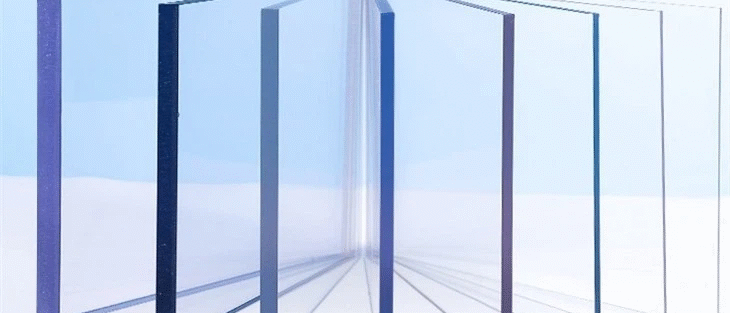
Does Polycarbonate Block UV?
Yes — polycarbonate absorbs nearly all ultraviolet radiation, typically over 99% in the 280–400 nm range covering UVA and UVB. Whatever sits under the panel is shielded from the outset, with or without a protective layer.
The complication is what that absorption does to the sheet. Ultraviolet energy taken up by the raw polymer degrades it from the exposed surface inward, which is why an untreated panel yellows and turns brittle while still doing its job of shielding what lies beneath.
For this reason, UV-protected polycarbonate sheets exist. A dedicated transparent layer takes the radiation load instead of the structural material, and works to:
- Prevent UV rays from reaching the base polymer
- Maintain colour and transparency over time
- Extend the service life of the sheet and reduce visible wear
- Preserve optical and insulating performance, even in harsh environments
Thickness, Weight and UV Coverage
| Type | Thickness | Weight/m² | UV protection |
|---|---|---|---|
| Solid | 1 – 12 mm | 1.2 – 14.4 kg | Both sides |
| Twin wall | 4 – 10 mm | 0.80 – 1.70 kg | Both sides |
| Multiwall | 8 – 18 mm | 1.60 – 2.90 kg | Both sides |
| Embossed | 1 – 4 mm | varies by pattern | Both sides |
| Corrugated | by profile | varies | Both sides |
Standard sheet: 2,100 × 5,800 mm (12.18 m²). Custom lengths to 11,800 mm.
Single-sided UV protection is available on request where the panel is used indoors or one face is permanently shaded — it reduces cost without affecting performance in that specific case.
Key Features & Benefits of UV Resistant Polycarbonate Sheets
- Blocks 99.9% of UV rays — shields the sheet and the people, plants and property beneath from sun damage
- No yellowing for 10–15 years — co-extruded double-sided UV layer retains colour and transparency
- Up to 250× stronger than glass — deforms under impact rather than shattering
- High light transmission — up to 90% clarity for bright, natural daylighting
- Thermal and sound insulation — reduces heat transfer and outside noise
- Weatherproof — performs from −40 °C to +120 °C, withstanding sun, rain and extreme weather
- Lightweight — half the weight of glass, cutting installation and framing costs
- Low maintenance — resists wear and degradation, needing far less upkeep than untreated sheets
- 10-year written warranty — a durable solution for long-term projects
Applications of UV Resistant Polycarbonate Sheets
- Building glazing — UV protection and clarity for architectural surfaces
- Roofing and skylights — see our full polycarbonate roofing sheets guide
- Greenhouses — protects plants from UV while admitting the light they need. See greenhouse panels
- Facades and terraces — weather-exposed surfaces requiring long-term clarity
- Outdoor covers — shields vehicles and equipment from sun damage
- Sports facilities — protects players and spectators from UV exposure
- Insulation panels — thermal and electrical insulation applications
- Outdoor furniture — protects surfaces from sun degradation
- Outdoor signage — extends the service life of advertising panels
- Windows and doors — polycarbonate windows with UV protection and visibility
- Public facilities — bus shelters, walkways and covered areas
Sector pages: construction · agriculture · home & outdoor · signage
Types of UV Resistant Polycarbonate Sheets
- Solid UV sheets — maximum strength and clarity for glazing, facades and safety barriers
- Clear UV sheets — glass-like transparency for skylights and windows
- Twin wall UV sheets — light hollow panels for carports and small covers
- Multiwall UV sheets — four-wall structure for superior insulation on roofs and greenhouses
- Corrugated UV sheets — profiled sheeting for roofing over existing structures
- Embossed / textured UV sheets — decorative light diffusion with privacy
All types come with double-sided UV protection as standard and are available in clear, opal, bronze, smoke grey and custom colours.
Installation and Care
The UV layer only works if it faces the sun. These points determine whether the warranty period is actually reached:
- UV face outward — the protected side is marked on the film. Installed reversed, the sheet yellows within months and the warranty does not apply.
- Keep the protective film on through cutting and installation, then remove it once work is complete.
- Flutes vertical on hollow sheets, running with the slope — never across.
- Oversize the fixing holes by 3–5 mm per side. The material expands about 3 mm per metre.
- Neutral silicone only — acidic silicone attacks polycarbonate.
- Clean with lukewarm water and mild soap. Never use solvents, ammonia or abrasives: they strip the UV layer, and the damage is irreversible.
Full cutting guide: how to cut polycarbonate sheets
UV Resistant Polycarbonate Sheet Price
UV resistant polycarbonate sheets from G-Crystal start from $2.50 to $3.50 per kilogram (FOB factory price). The final price depends on thickness, colour, sheet type and order volume.
Price per m² = thickness (mm) × density × price/kg
A 4 mm solid sheet weighs 4.8 kg/m². At $3.00/kg → $14.40/m².
A 10 mm multiwall weighs 1.85 kg/m² → $5.55/m².
| Term | Detail |
|---|---|
| Factory price (FOB) | $2.50 – 3.50 USD/kg |
| MOQ | 5 tonnes or one 20 ft container |
| Lead time | 14 days from order confirmation |
| Incoterms | FOB, CIF, CFR, EXW |
| Ports | Alexandria, Damietta |
| Samples | Available for technical qualification |
Price your order with our polycarbonate price & container calculator — weight, cost per m², cost per sheet and container fill.
As a direct manufacturer — not a trader — we offer factory-direct pricing with bulk discounts for distributors, contractors and large projects, shipping worldwide to 60+ countries with full export documentation.
Full pricing guide: polycarbonate sheet price · bulk orders
Why Choose UV Resistant Polycarbonate Sheets from G-Crystal?
Manufacturing polycarbonate sheets since 2006, G-Crystal Plastic Industries produces 1,000 tonnes per month from a 4,700 m² facility in Egypt. Our UV resistant sheets are engineered for outdoor applications exposed to harsh sunlight, with technical knowledge and quality control built over two decades of production.
- Manufacturer, not a trader — factory-direct pricing, no middleman
- Double-sided UV protection as standard on every sheet
- 100% virgin raw material for maximum clarity and strength
- ISO 9001, 14001, 45001 and CE Mark certified (CE certificate 1871-CPR-RtF-846)
- 10-year written warranty against yellowing
- Export to 60+ countries with complete documentation
More on our capability: polycarbonate sheet manufacturers · full sheet range · virgin material commitment
Get in touch for pricing and bulk orders — quote within 24 hours.
+201095990442 |info@gcrystal-pc.com
Frequently Asked Questions
Is polycarbonate UV resistant?
Standard polycarbonate can yellow over time, but G-Crystal UV resistant polycarbonate sheets are co-extruded with a double-sided UV protection layer that prevents yellowing and degradation for 10–15 years, even under direct sun.
Do UV resistant polycarbonate sheets block UV rays?
Yes. Our UV resistant polycarbonate sheets block up to 99.9% of harmful UV rays, protecting both the sheet and the people, plants, or products beneath it.
What is the price of UV resistant polycarbonate sheets per KG?
The price of G-Crystal UV resistant polycarbonate sheets ranges from $2.50 to $3.50 USD per KG, depending on thickness, color, and order volume.
How long do UV resistant polycarbonate sheets last?
With co-extruded UV protection, our sheets retain clarity and strength for 10 to 15 years or more, and are backed by a written warranty of up to 10 years against yellowing.
What are your shipping terms for international orders?
We ship worldwide under FOB (Free On Board) terms, ensuring professional handling and loading from our manufacturing facilities, with export to over 60 countries.
What is the difference between co-extruded and sprayed UV protection?
Co-extruded protection is fused into the sheet during manufacturing and becomes part of the panel, lasting 10–15 years. A sprayed surface coating adheres only to the outside and typically degrades within two to three years. Both may be sold as “UV protected”, but they are not the same product.
Which side of the sheet has the UV protection?
Our sheets carry UV protection on both sides as standard, so orientation errors are less costly. The face intended for the sun is still marked on the protective film and should be installed outward.
What is the minimum order quantity?
5 tonnes or one 20 ft container. Samples are available for technical qualification before ordering.
What is your lead time?
14 days from order confirmation to ready-for-shipment, plus sea transit to your destination port.
Are UV resistant sheets available in all thicknesses and types?
Yes. UV protection is standard across solid (1–12 mm), twin wall (4–10 mm), multiwall (8–18 mm), embossed and corrugated sheets, in clear, opal, bronze, smoke grey and custom colours.
Does the UV layer affect light transmission?
No meaningfully. The layer is approximately 50 microns thick and optically clear — a clear solid sheet still transmits up to 90% of visible light with the protection in place.
How should UV resistant sheets be cleaned?
With lukewarm water and mild soap using a soft cloth. Never use solvents, ammonia or abrasive cleaners: these strip the UV layer and the damage cannot be reversed.