

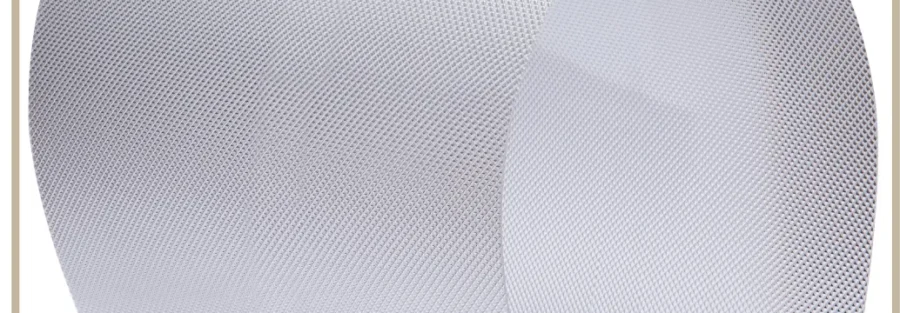
Bendable plastic sheeting is any thermoplastic panel that can be curved without cracking — but the materials that qualify differ enormously in how far they bend, how long they last outdoors, and what happens when the limit is exceeded.
Polycarbonate cold-bends to a minimum radius of 175 times its thickness with no heat and no specialist equipment. That single figure determines whether a curved roof, dome or canopy works as designed or fails in its second season.
This guide covers the bend limits for each material, the difference between cold and heat forming, what goes wrong when the radius is wrong, and how to specify the correct sheet for a curved application.
If you are comparing sheet types more broadly, see our complete polycarbonate buyer’s guide.

What Is Bendable Plastic Sheeting?
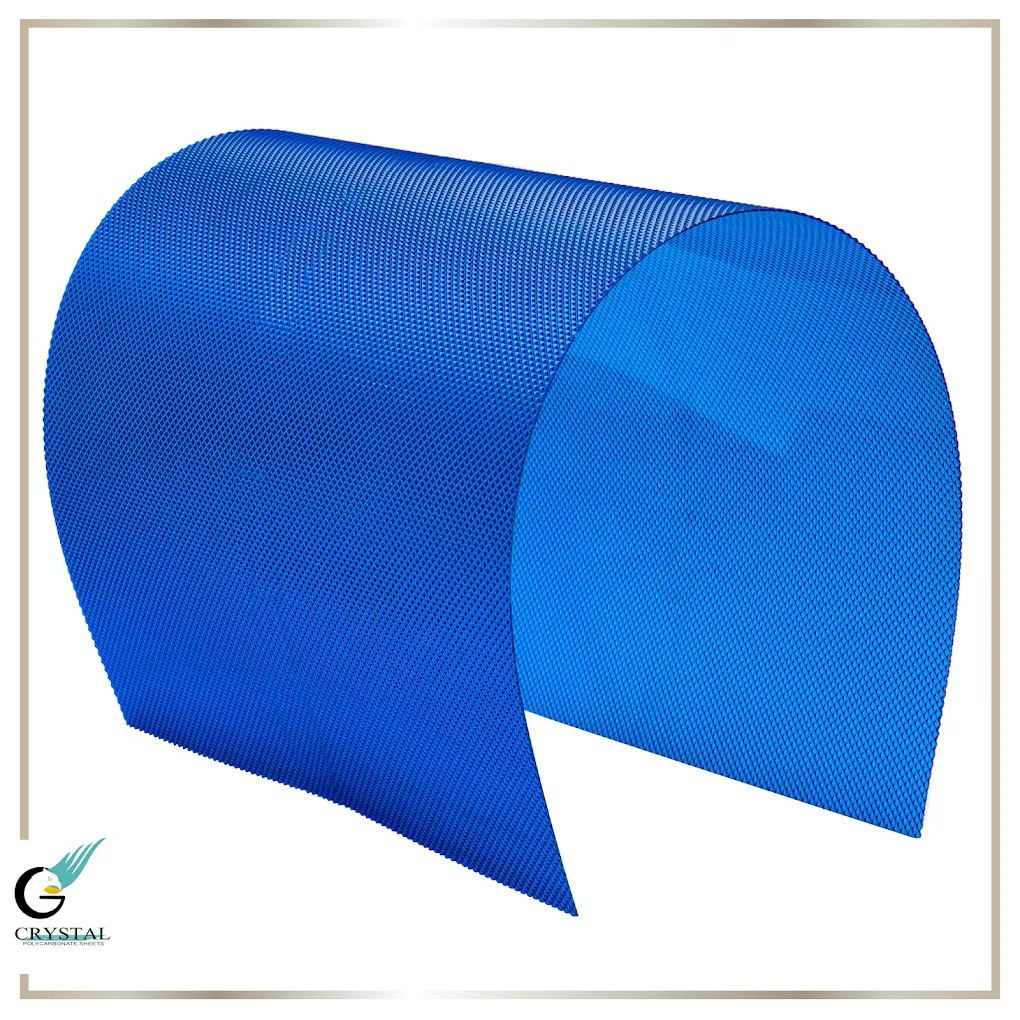
Bendable plastic sheeting is a thermoplastic panel engineered to be curved, folded or formed without fracturing. Unlike rigid glazing, it accommodates single-axis curvature through elastic deformation — the sheet holds the curve while the supporting structure maintains it.
For distributors, contractors and OEM buyers, the practical question is not whether a sheet bends, but how tight a radius it tolerates permanently without developing stress cracks.
Three properties determine that limit: the polymer’s elastic modulus, its resistance to environmental stress cracking, and its thickness. Of these, thickness is the only variable the specifier controls — which is why every bend limit is expressed as a multiple of it.
Materials Used for Bendable Plastic Sheeting
| Material | Cold-bend capability | Outdoor lifespan | Best suited to |
|---|---|---|---|
| Polycarbonate (PC) | Excellent — 175× thickness | 15–20 years | Curved roofs, domes, canopies, greenhouses |
| PETG | Good — thermoformable | 5–10 years | Display cases, POP, food-contact barriers |
| Acrylic (PMMA) | Moderate — cracks under cold bend | 5–8 years | Indoor signage, displays |
| PVC | Good but weak | 3–6 years | Temporary covers, packaging |
| Polyethylene (PE) | High flexibility, low rigidity | 2–5 years | Protective sheeting, liners |
- Polycarbonate (PC) — the only material on this list that combines cold-bend capability with structural performance and long-term UV stability. Co-extruded UV protection prevents yellowing for 15+ years.
- PETG — clear and easily thermoformed, but degrades under sustained UV exposure. Suited to interior applications.
- Acrylic (PMMA) — higher optical clarity than polycarbonate, but brittle. Cold bending typically causes crazing or fracture; acrylic requires heat forming for any meaningful curve.
- PVC — bends readily because it is soft, which is also why it deforms under load and embrittles within a few seasons outdoors.
- Polyethylene (PE) — flexible but structurally weak. Used as sheeting rather than glazing.
Material Comparison for Curved Applications
| Property | Polycarbonate | Acrylic (PMMA) | PVC | PETG |
|---|---|---|---|---|
| Cold-bend radius | 175× thickness | Not recommended | Variable, deforms | Limited |
| Impact resistance | 250× glass | Low (brittle) | Low | High |
| Light transmission | Up to 90% | 92%+ | Medium | High |
| UV resistance | Excellent (co-extruded) | Poor (yellows) | Fair | Moderate |
| Outdoor lifespan | 15–20 years | 5–8 years | 3–6 years | 5–10 years |
| Temperature range | −40 to 120 °C | −30 to 80 °C | −10 to 60 °C | −40 to 70 °C |
| Fire rating | Self-extinguishing | Combustible | Varies | Limited |
| Heat forming | Yes (150–160 °C) | Yes | Yes | Yes |
For curved exterior work, polycarbonate is the only material that delivers cold-bend capability, impact resistance and 15-year UV stability in the same panel. Full specifications: solid polycarbonate sheets.
Minimum Bending Radius: The Figure That Governs the Design
Minimum cold-bend radius = Thickness × 175| Thickness | Min. radius | Min. diameter | Design radius (+15%) |
|---|---|---|---|
| 2 mm | 350 mm | 700 mm | 405 mm |
| 3 mm | 525 mm | 1,050 mm | 605 mm |
| 4 mm | 700 mm | 1,400 mm | 805 mm |
| 6 mm | 1,050 mm | 2,100 mm | 1,210 mm |
| 8 mm | 1,400 mm | 2,800 mm | 1,610 mm |
| 10 mm | 1,750 mm | 3,500 mm | 2,015 mm |
| 12 mm | 2,100 mm | 4,200 mm | 2,415 mm |
Applies to solid sheet at ambient temperature. The design column adds the 15% safety margin recommended for permanent installations.
For multiwall panels: the same 175× rule applies, but the panel bends along the rib direction only. Bending across the ribs crushes the internal chambers, destroying both the structural integrity and the insulation value. See multiwall polycarbonate specifications.
Cold Bending vs Heat Bending
These are two distinct processes with different limits, equipment and outcomes. Confusing them is the most common specification error in curved polycarbonate work.
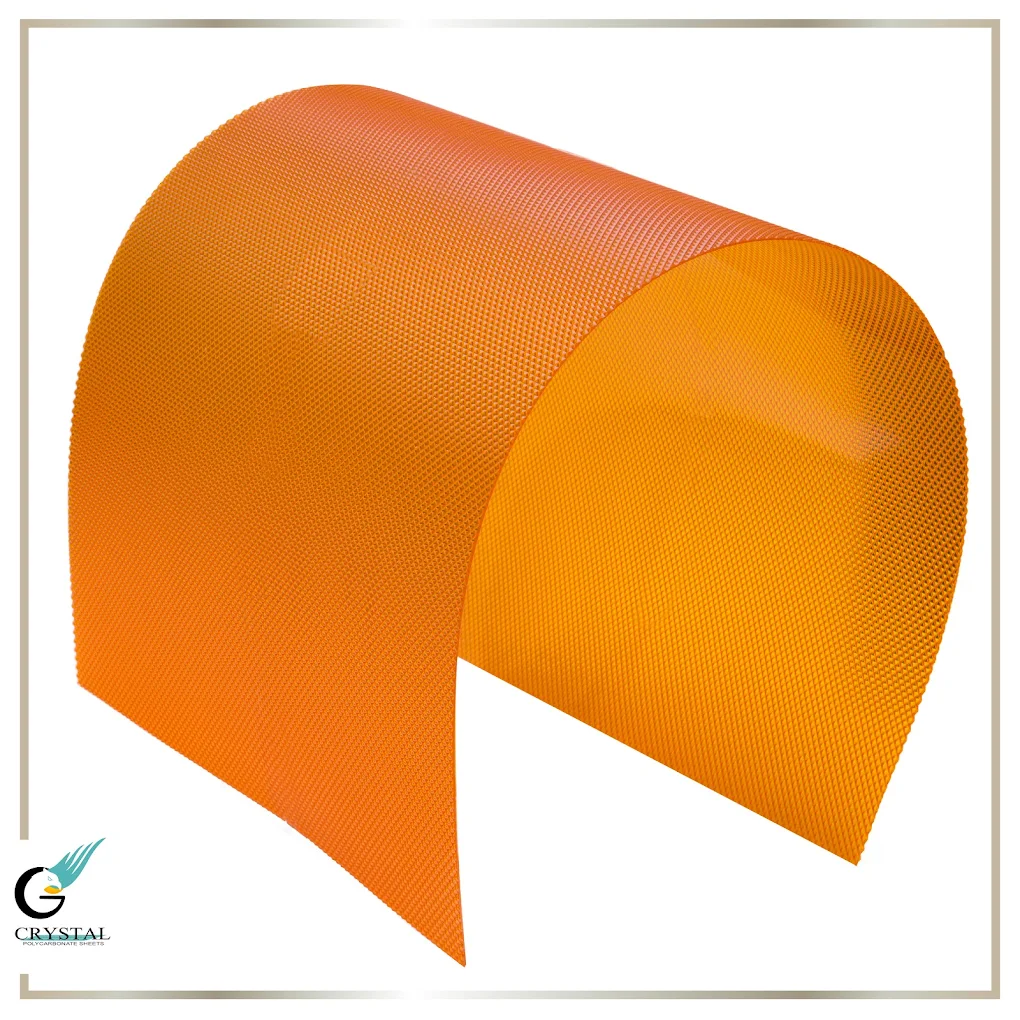
Cold bending — on site, no equipment
The sheet is curved mechanically at ambient temperature and held by the supporting structure. The material remains under permanent elastic stress, which is why the radius limit is not negotiable.
- Applies to: solid sheet up to 12 mm, multiwall up to 25 mm — respecting the 175× radius
- Advantages: no heating, no jigs, no specialist labour — carried out by the installation crew
- Limitation: single-axis arcs only. The sheet springs back if released
Heat bending — workshop, permanent form
The sheet is heated to 150–160 °C until pliable, formed over a mould, then cooled slowly. The shape becomes permanent.
- Applies to: solid sheet only — multiwall collapses under heat
- Advantages: radii far below the cold-bend limit, compound curvature, no spring-back
- Requirements: oven or strip heater, mould, controlled cooling
The step that is routinely skipped: polycarbonate absorbs atmospheric moisture. The sheet must be dried at 120 °C for 1–2 hours per millimetre of thickness before heating. Trapped water vaporises during forming and produces permanent internal bubbles that cannot be removed.
Selecting the method
| Requirement | Method |
|---|---|
| Arched roof, dome, curved canopy | Cold bending |
| Radius below 175× thickness | Heat bending |
| Multiwall panel | Cold bending only |
| Compound or double curvature | Heat bending |
| On-site installation, standard crew | Cold bending |
| Machine guards, display cases, tight profiles | Heat bending |
What Goes Wrong When the Radius Is Exceeded
Polycarbonate does not fail immediately when over-bent. It fails later — which is what makes the error expensive.
Visible during installation:
- Stress whitening — a pale haze along the outer face of the curve, indicating permanent polymer deformation
- Audible creaking as the sheet is forced into position
Delayed failure, weeks to months later:
- Micro-crazing — fine surface cracks radiating from fixing points and along the curve, accelerated by UV exposure
- Environmental stress cracking — a sheet under permanent bending stress becomes chemically vulnerable. Cleaning agents, sealants and solvents that a flat sheet tolerates will initiate cracks on an over-bent one
- Fracture at the fixing points, where bending stress and mechanical load combine
The commercial consequence: an over-bent installation passes inspection, survives the first season, and fails in the second — after the installer has left and the claim reaches the supplier.
The margin that prevents it: specify 10–15% above the minimum. On a 6 mm sheet, design for 1,210 mm rather than the 1,050 mm limit. The clearance costs nothing at design stage and removes the failure mode entirely.
Applications for Bendable Plastic Sheeting
| Application | Sheet type | Thickness | Why |
|---|---|---|---|
| Arched greenhouse | Multiwall | 8–10 mm | Insulation plus cold-bend along ribs |
| Barrel-vault walkway | Multiwall | 10–16 mm | Long spans with thermal control |
| Dome skylight | Solid | 4–6 mm | Compound curvature requires heat forming |
| Curved canopy | Solid | 4–8 mm | Clarity and impact resistance |
| Polytunnel | Multiwall | 6–8 mm | Light weight, tight cold-bend radius |
| Curved machine guard | Solid | 3–6 mm | Heat-formed to exact profile |
| Wavy carport roof | Corrugated | 1.2–2 mm | Profile provides rigidity |
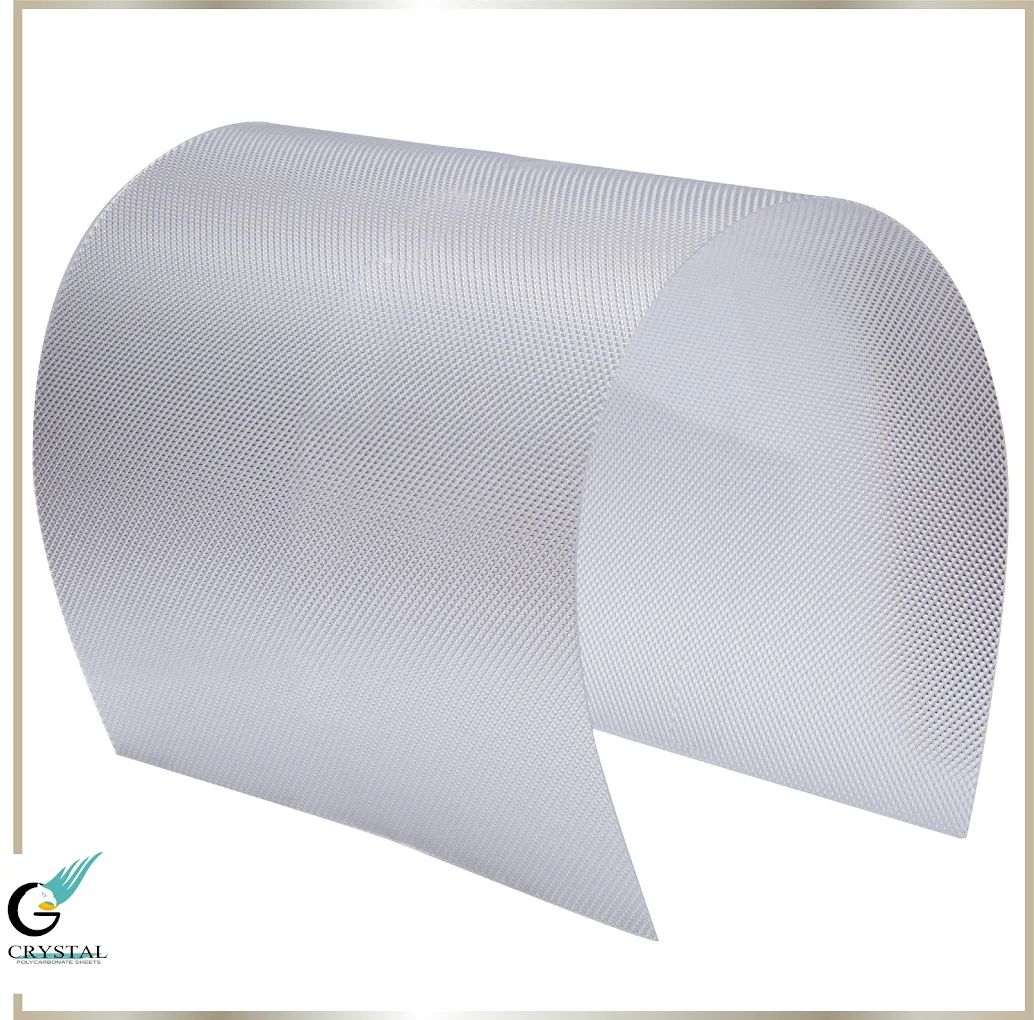
| Illuminated curved sign | Solid or embossed | 2–4 mm | Light diffusion at tight radius |
For agricultural structures, see our agriculture and greenhouse solutions. For architectural curves, see construction and architecture.
Specifying Bendable Sheeting for a Project
Five variables determine whether the specification works:
- Required radius — take the tightest curve in the design and divide by 175. That is the maximum thickness that cold-bends to it. If the result is thinner than the structural requirement, the project needs heat forming.
- Span between supports — a curved sheet carries load differently from a flat one. The arch adds rigidity, but the fixing points carry both bending and wind load.
- Panel orientation — for multiwall, the ribs must run along the direction of the curve, and the internal channels must drain toward the low point.
- UV face — the protected face is marked on the film and must face outward. A sheet installed inverted yellows within a season, regardless of bend radius.
- Thermal expansion — polycarbonate expands 0.065 mm per metre per °C. A 6 m curved panel moves up to 25 mm between seasons. Fixing holes must be drilled 2–3 mm oversize.
Buying Bendable Polycarbonate Sheeting Wholesale
Polycarbonate is priced by weight, not by sheet. Cost per square metre follows directly from thickness:
Weight per m² = Thickness (mm) × 1.2
Price per m²  = Weight per m² × price per kg
Worked example — 6 mm solid at $3.00/kg:
6 × 1.2 = 7.2 kg/m² → 7.2 × $3.00 = $21.60/m²Factory price: $2.50–3.50/kg FOB, depending on type, thickness, colour and volume. Multiwall panels cost significantly less per square metre at the same nominal thickness, because the internal chambers use less material.
Calculate your order cost and container load →
Full pricing breakdown: polycarbonate sheet price guide.
Verifying a supplier before ordering
Virgin polycarbonate resin trades at $2.10–3.46/kg depending on region — raw material alone, before extrusion, UV coating or margin. A finished sheet quoted below that cannot be virgin material.
For curved applications this matters more than for flat glazing. Regrind polycarbonate has unpredictable stress-crack resistance. A recycled sheet may meet the 175× radius on paper and still fail within months, because its molecular structure is inconsistent.
Request before committing:
- Technical data sheet with declared resin origin
- UV application method in writing — co-extruded, not sprayed
- ISO 9001, ISO 14001, ISO 45001 and CE certification
- Written warranty against yellowing
- Declared weight per m² for the exact specification
Why Choose G-Crystal
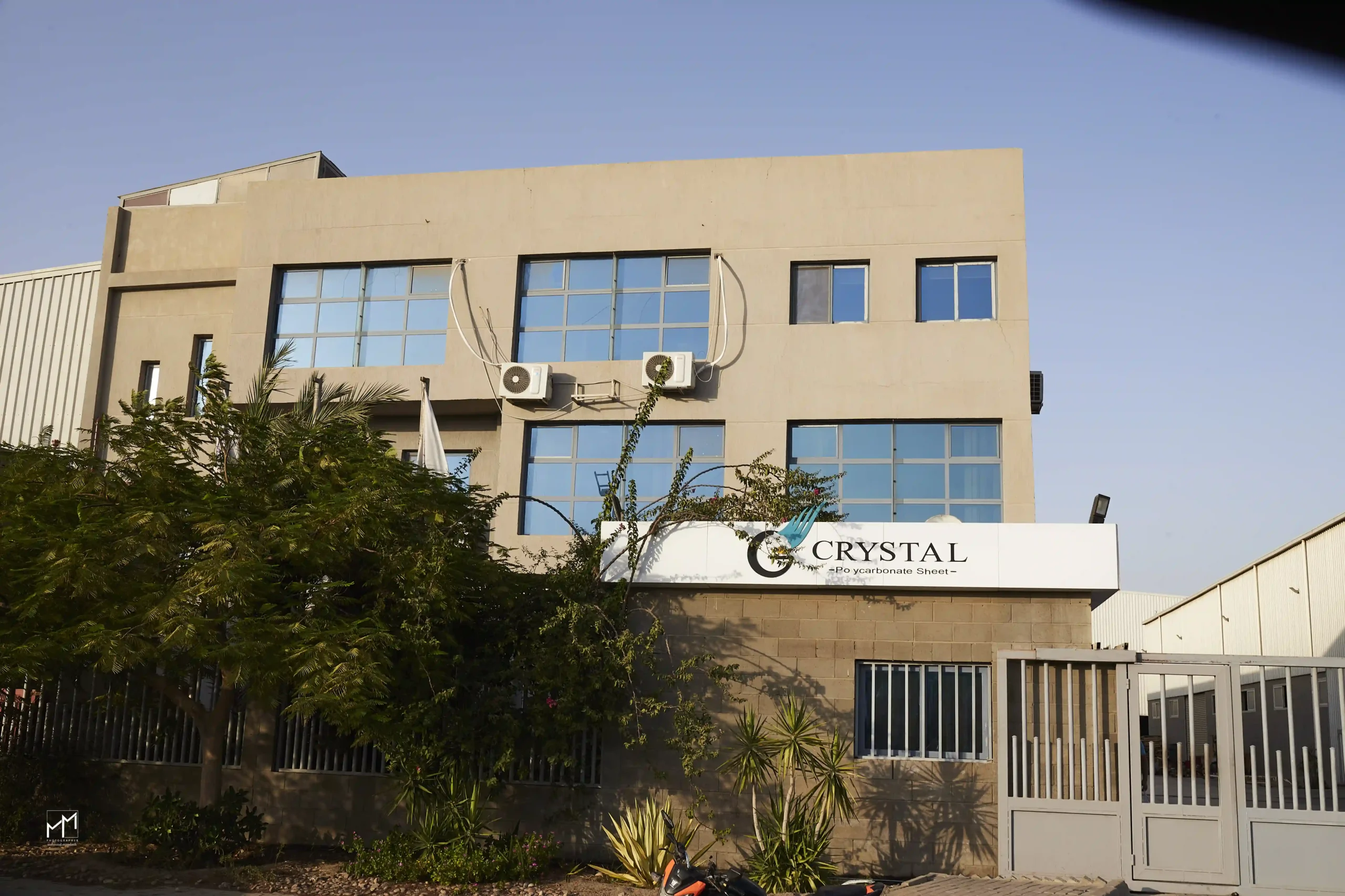
As a manufacturer exporting to over 60 countries, G-Crystal supplies certified bendable polycarbonate sheeting to distributors, contractors and OEM clients.
- 100% virgin resin — Covestro, Sabic, LG, Samsung, Mitsubishi
- Co-extruded UV protection on both faces as standard
- Factory-direct FOB pricing: $2.50–3.50/kg
- ISO 9001 · ISO 14001 · ISO 45001 · CE certified
- Custom thickness, colour, width and length up to 12 m
- Accessory kits: glazing bars, U/H/HCP profiles, end caps, fasteners
- MOQ: 5 tonnes or one 20 ft container · 14-day production lead time
- Free samples and full technical data sheets
Learn more about G-Crystal or view our complete product range.
Frequently Asked Questions
What is the minimum bending radius for polycarbonate?
175 times the sheet thickness. A 6 mm sheet requires a minimum radius of 1,050 mm; a 10 mm sheet requires 1,750 mm. For permanent installations, design for 10–15% above the minimum.
Can polycarbonate sheets be bent without heat?
Yes. Solid sheet up to 12 mm and multiwall up to 25 mm cold-bend at ambient temperature, provided the 175× radius is respected. No heating, jigs or specialist equipment required.
Can multiwall polycarbonate be bent?
Yes, but only along the rib direction. Bending across the ribs crushes the internal chambers and destroys both the panel structure and its insulation value.
Why does polycarbonate turn white where it bends?
Stress whitening — permanent deformation of the polymer at the outer face of the curve. It indicates the bend radius has been exceeded and the sheet is carrying stress it was not designed for.
Do I need to dry polycarbonate before heat bending?
Yes. Polycarbonate absorbs atmospheric moisture. Without drying at 120 °C for 1–2 hours per millimetre of thickness, trapped water vaporises during forming and creates permanent internal bubbles.
Can I bend a sheet that is already installed?
No. Cold bending must happen during installation with the sheet supported throughout. Forcing a curve into a fixed sheet concentrates stress at the fixing points and causes cracking.
Which bends better — polycarbonate or acrylic?
Polycarbonate. Acrylic is more brittle and typically crazes or fractures under cold bending; it requires heat forming for any meaningful curve. Polycarbonate cold-bends to 175× thickness and resists impact 250 times better than glass.
How much clearance should I allow above the minimum radius?
10–15%. On a 6 mm sheet, design for 1,210 mm rather than the 1,050 mm limit. The clearance costs nothing at design stage and eliminates delayed stress-cracking failures.
How should bendable polycarbonate sheeting be cleaned?
Lukewarm water with mild soap and a soft cloth. Never use abrasive cleaners, ammonia, acetone or isopropyl alcohol — these attack the polymer, and a curved sheet under bending stress is far more vulnerable to chemical attack than a flat one.
What is the price of bendable polycarbonate sheeting?
Factory price is $2.50–3.50/kg FOB. A 6 mm solid sheet weighs 7.2 kg/m², working out to around $21.60/m² at $3.00/kg. Multiwall costs considerably less per square metre at the same thickness.
Request a Quote
Send your curve radius, sheet type, thickness, colour and quantity — our technical team will confirm whether cold bending is viable for your design and quote the exact specification.
Minimum order: 5 tonnes or one 20 ft container
Incoterms: FOB, CIF, EXW, CFR
Certifications: ISO 9001 · ISO 14001 · ISO 45001 · CE
📧 info@gcrystal-pc.com
📱 WhatsApp: +2 01095990442


